6G Technology
Powering the Next Era of Intelligent Connectivity
6G will redefine what wireless networks can do—expanding performance far beyond today’s 5G capabilities while enabling an intelligent, adaptive, and autonomously optimized communications fabric. Built at the intersection of advanced radio engineering and AI‑driven intelligence, 6G is designed to support the next generation of connected applications across mobility, industry, healthcare, and immersive digital experiences.
A New Vision for Cellular Connectivity
6G aims to deliver a step‑change in network capabilities. While 5G established the foundation for high-throughput, low-latency connectivity, 6G advances these goals by targeting:
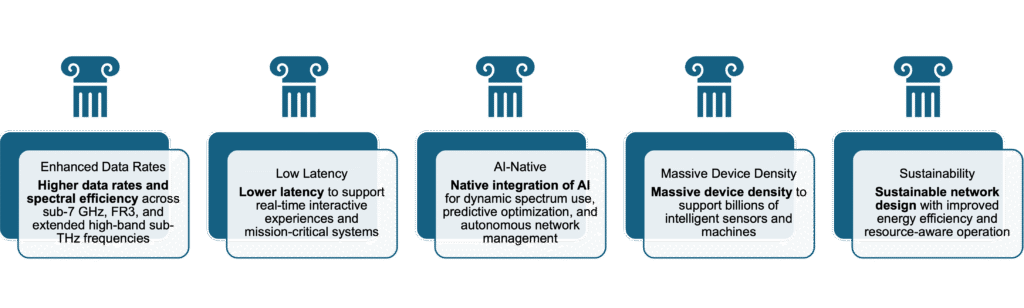
These advancements enable reliable, adaptive wireless infrastructure capable of supporting emerging applications not feasible with current technologies.
Emerging Use Cases Enabled by 6G
With enhanced capacity and intelligent radio management, 6G will support entirely new classes of applications:
Immersive and Holographic Communications
High‑bandwidth, ultra‑low-latency connectivity makes real-time holographic telepresence, volumetric video, and digital twins possible at scale.

Advanced Industrial Automation
Factories, warehouses, and infrastructure systems will leverage tightly synchronized wireless links for robotic coordination, precision automation, and predictive maintenance.

Smart Mobility and Transportation
6G supports next-generation V2X communications, enabling safer autonomous driving, real-time traffic orchestration, and highly reliable communication for drones and logistics systems.

Healthcare and Remote Diagnostics
High‑reliability connections will enable advanced medical imaging, remote surgery support, and continuous patient monitoring with real-time analytics.

Ubiquitous Sensing and Environment Mapping
6G networks will integrate communication and sensing, enabling devices to detect objects, gestures, and environmental conditions—blending connectivity with spatial awareness.

AI-Native Wireless Networks
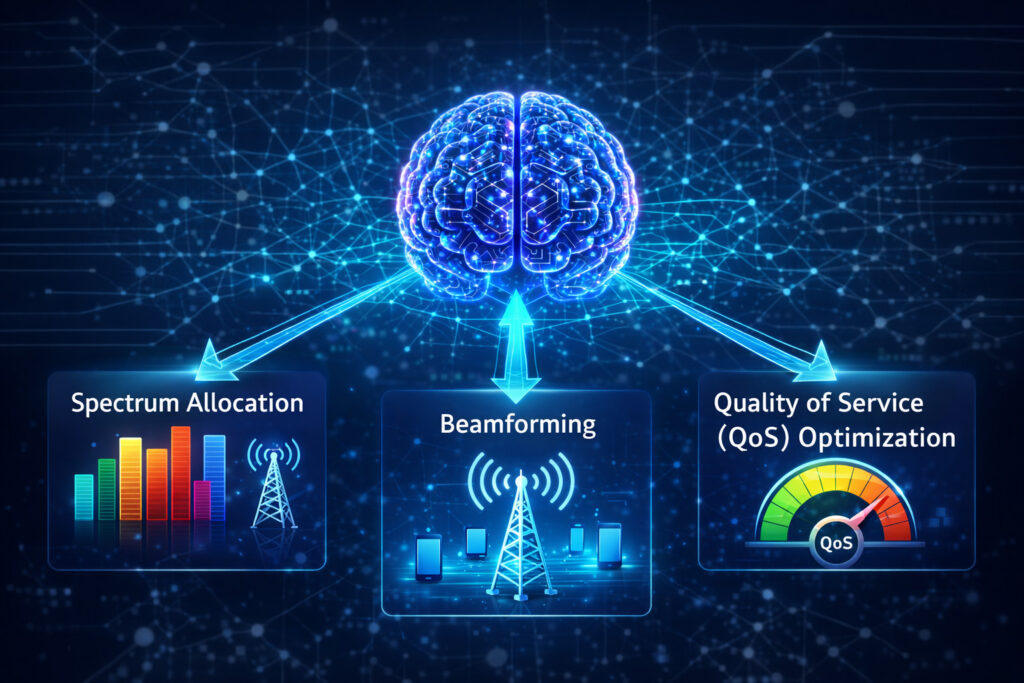
AI isn’t just an add-on in 6G—it’s foundational. 6G networks will use AI/ML models to:
- Optimize spectrum allocation in real time
- Predict interference and adapt waveforms on the fly
- Automate network planning and configuration
- Enhance reliability through continuous learning from device and environmental data
- Improve energy efficiency across large-scale network deployments
This shift transforms the network from a static infrastructure into a self‑learning, self-adjusting platform optimized for performance, efficiency, and user experience.
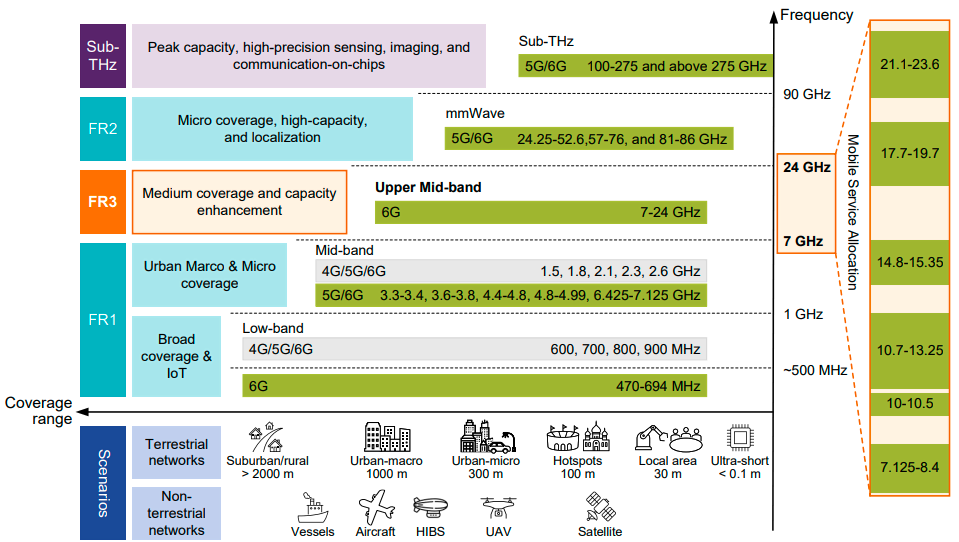
FR3: The New Frontier of 6G Spectrum
A defining feature of 6G is the expansion into Frequency Range 3 (FR3)—the spectrum between traditional sub-6 GHz bands and millimeter‑wave frequencies. FR3 generally covers 7–24 GHz, depending on regional regulatory definitions.
Why FR3 Matters
FR3 provides a compelling balance between coverage and capacity:
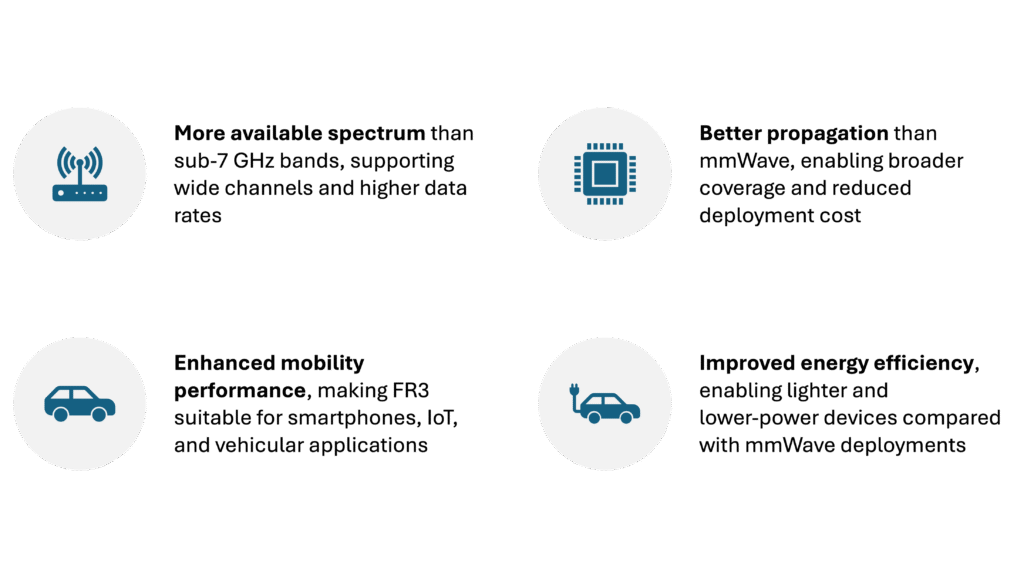
Because FR3 delivers mid‑range propagation with near‑mmWave bandwidth, it is expected to become a key global workhorse band for 6G devices and infrastructure.
Testing Significance for FR3
New bands introduce new engineering challenges:
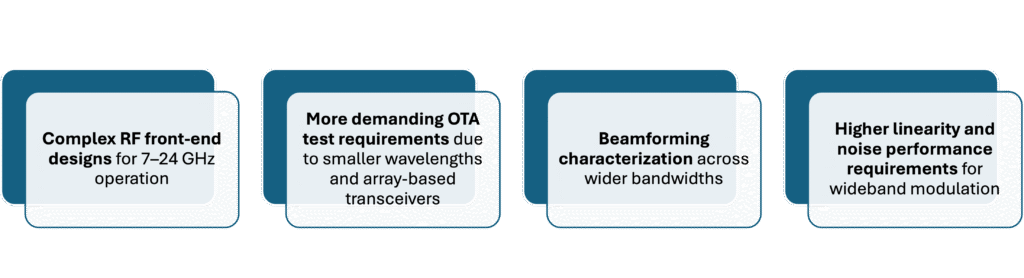
Reliable FR3 device and infrastructure testing is essential to ensure performance, interoperability, and compliance as commercial 6G systems emerge.
Enabling the Future of 6G
6G represents the next leap in wireless innovation—bringing together advanced RF, intelligent networking, AI/ML, and new spectrum access to support the applications of the next decade and beyond. Understanding the behavior of radios operating in FR3 and other emerging bands is critical to ensuring the performance and reliability of future 6G devices and systems.